What is a Goldtone?

Known as one of Edward Curtis’ favorite medium, he describes the medium beautifully:

“The ordinary photographic print, however good, lacks depth and transparency, or more strictly speaking, translucency. We all know how beautiful are the stones and pebbles in the limpid brook of the forest where the water absorbs the blue of the sky and the green of the foliage, yet when we take the same iridescent pebbles from the water and dry them they are dull and lifeless, so it is with the ordinary photographic print, but in the Curt-Tones all the transparency is retained and they are as full of life and sparkle as an opal.”

Edward S. Curtis, Curtis photographs

EDWARD CURTIS: “Canon de Chelly” 11 x 14 inches

Goldtones / Orotones / Curt-tones are rare and sought after. Comprising of less than 1% of what the artist left behind. Each example was creating by Curtis, in his own studio to help fund his larger project “The North American Indian”. In his time the goldtone medium was rarely used, and though Edward Curtis did not invent the process he created more goldtone examples than any other artist. In simple terms, a goldtone is a positive image on glass (most images are a positive image on paper).

Oldwell

EDWARD CURTIS: “At the Old Well at Acoma” 8 x 10 inches

The process Edward Curtis used was to take a clear plate of optical glass and spread a liquid emulsion on the surface of the plate. He then projected his negative onto the glass to create a positive image. The highlights and shadows could not be seen unless there was some type of backing on the image. He mixed a combination of banana oils and bronzing powders to create a goldtone effect, and then floated this mixture onto the dried emulsion.

CDM

EDWARD CURTIS: “Canon Del Muerto” 14 x 11 inches

The final process involved backing the glass image to so that all the chemicals bonded together. Lastly Edward Curtis framed each image in either a batwing, pie-crust, or ribbon frame. The Goldtones that have surfaced today are by far some of his most brilliant works.

WF

EDWARD CURTIS: “The Fisherman – Wisham” 14 x 11 inches

You Can Boost Your Creativity by Looking At Art

Something in our brain responds when we look at a painting. That experience refreshes and changes us. Afterwards we are more creative and open to learning. We are less mentally fatigued.

Our brains are primed for enjoying art.

For longer than we’ve had the written word, humans have created and stared at images drawn onto walls in the hopes of invoking something — story, awe, remembrance.

Forty thousand years ago, beasts may have been drawn in hopes they’d become more common, or perhaps those images were the work of ancient shamans, trying to account for some mysterious spirit vision.

We don’t know exactly why we started doing it but we persist in making and looking at visual art to this day. And while we can only theorize about what inspired us to start making art, modern research helps us understand something about what’s going on in our brain when we see it now.

Tribal

A study published in the June issue of the journal Brain and Cognition looked at the research that neuroscientists have done while scanning the brains of people looking at paintings. In some cases subjects were asked to evaluate the work they looked at, in others they just looked.

Viewing paintings triggered responses in brain regions associated with visual understanding and object recognition, as might be expected, but viewing artwork also was connected to activity associated with emotions, inner thoughts, and learning.

Other research tells us more about how art can change the way we see the world.

In Business Insider’s 21-day self-improvement program, one early assignment involves spending time in a museum — but the point of that isn’t just to have a fun afternoon.

After visiting an art museum, students show stronger critical thinking skills and are more socially tolerant. Much of the research on this topic involves children or young adults but the benefits are consistent, and other research shows that (more general) arts programs may help older adults keep healthy and stave off cognitive decline, though more studies are needed in the area.

Mother's Day

Visiting a museum can relieve mental fatigue and restore the ability to focus in the same way that the outdoors can, according to research from the University of Queensland in Australia — this research wasn’t limited to art museums, which is why the assignment doesn’t require an art museum specifically.

But in general, going to a museum is a novelty-seeking venture, which triggers your brain to be open to learning. Not only does this provide long lasting cognitive benefits, it’s also connected to one of the Big 5 personality traits — openness to experience. This is the trait most associated with creative achievement.

Exposing ourselves to art, this thing that has been a part of human experience for thousands of years, has effects on us.

Writing for the National Endowment of the Arts, Brain Pickings founder Maria Popova described this phenomenon as “the power to transcend our own self-interest, our solipsistic zoom-lens on life, and relate to the world and each other with more integrity, more curiosity, more wholeheartedness.”

Written by Kevin Loria of www.businessinsider.com


Aspen Art Gallery Artist Woodrow Blagg

With utmost care and attention to every detail, Woodrow Blagg creates each of his drawings using only graphite and paper. Demonstrating a mastery of his medium, his photorealistic pieces depict dramatic scenes of life in the West. Growing up in Texas, Blagg developed a deep appreciation for the ongoing rituals of ranch life and cowboy culture. Though he lives in Pennsylvania today, his love for western culture and imagery is as indelible as ever.

Blagg grew up in a family of 10 children, four of whom became artists. You could say creativity and talent is in his blood. We are very excited to introduce our newest piece called, “Mother’s Day” a 30 x 48 inch pencil drawing that depicts a cowboy working with cattle. This powerful image really shows Blagg’s interest in the hard physical labor seen on a ranch as well as his understanding of the anatomy of both humans and cattle.

When we asked Blagg how he chose the title, he remarked that the story of “Mother’s Day” is simple, “The round-up happens every spring on the Waggoners’ Ranch, and for many years I was on this ranch in the spring through Mother’s Day. This image is dedicated to my mother who passed away almost 3 years ago; she was mother of 10 children. Symbolically, this drawing shows mother cows protecting and guarding the baby calves. Ever alert and ready from harm, these mother cows were great portraits for me and a stalwart testament how our mothers’ presence influenced all of us children. It’s a gift to her.”

Mother's Day

Valley Fine Art has a strong collection of Blagg’s works. These are pieces that must be seen to be believed. The cowboys and cows are so realistic in “Open Range” and “Jack O’ Clubs” that you’ll try to rub the dust out of your eyes. Woodrow Blagg has made an impressive mark on the contemporary art scene, far beyond the Western category. We invite you to enjoy these artworks with us in the gallery or online. http://www.valleyfineart.com/artists-art/?at=WoodrowBlagg

"Zig-Zag"
“Zig-Zag”

Artwork by Charles Partridge Adams

Widely considered to be Colorado’s’ finest landscape artist, Charles Partridge Adams had a deeply engrained love for the natural world. Adams wrote in his memoir: “I saw the Rocky Mountains as I had dreamed of them before I came west. Towering above a great valley filled with afternoon mists, their summits glistening with the pure white of winter snows. They formed an entrancing sight that I can never forget.” After moving to Colorado from Massachusetts in 1876 at the young age of 18, Adams began spending the bulk of his time outside of work travelling the state and painting its many epic landscapes.

Spanish Peaks Sunrise

Spanish Peaks Sunrise, oil on board, 12 x 20 inches – Available at Valley Fine Art

Adams was mostly a self-taught artist, learning through experimentation and interaction with other artists of the time. This process of teaching himself to paint and his diligent work ethic resulted in him being a highly prolific painter creating over 1,000 works in his lifetime. Even in 1893, when the silver panic hit Colorado and the economy nosedived, he managed to reach scenic sites and paint by striking up a deal with the railroad. In exchange for two of his works, he and a photographer friend received a free railroad pass, a private car, and the services of a cook.

Snow, Mt. Princeton

Mt. Princeton after Snow, oil on canvas, 10 x 15 inches – Sold at Valley Fine Art

 In 1900 Adams began renting a studio in Estes Park, where he began to find success in selling his artwork to tourists. He became known for his stunning views of snowy mountains peaks and is his ability to capture very fleeting lighting. Because of his love and time spent in Colorado, Adams created a personal bond with the landscape that is very apparent in his artwork, “He gathered an intimate knowledge of the state and had a deep emotional connection to it,” says Thomas Smith, co-curator of the exhibit Rocky Mountain Majesty: The Paintings of Charles Partridge Adams (1858 – 1942).

Adams Sopris Unframed

Mount Sopris, oil on canvas, 5 ½ x 8 inches – Sold at Valley Fine Art

Charles Partridge Adams artwork is still highly sought after in private collections and museums, including the Denver art museum. Anyone who has been to Colorado and has experienced its stunning natural beauty can see the love and passion in Adams paintings. His masterful depictions of our mountains peaks allow the viewer to fall in love all over again with the majesty and mystery of the mountains.

Harold Joe Waldrum (1934–2003)

The painter Harold Joe Waldrum was born in Texas and came to New Mexico with an already-keen eye for the southwestern landscape. The color, texture, and character he found in Taos, however, exceeded his wildest imagination and the region became his lifelong muse. Waldrum’s journey to becoming a well-respected and established artist was fueled by his diverse artistic background, having pursued a musical proclivity, painting, photography, and even video. His unique and intelligent approach of transforming the visible world onto canvas earned him a coveted spot in many prominent collections and galleries.

After years of family life and teaching music, Waldrum earned his Masters in Painting. He became well known around 1980 for his “Window Series,” a series of value and color studies inspired by the adobe buildings in the Southwest. Waldrum felt the pulse of the landscape, architecture, and people around him. He observed, “There is a beautiful place in the United States of America. It is in northern New Mexico between the two mountain ranges. This place is called The Cradle. Its people, the land, and its elements are special and peculiar. I find the genius of this place reflected in the churches.” Waldrum’s eye for the distinct lines, color, and negative space of churches, when translated to the canvas, brought him acclaim.

Delante de la Iglesia en Ranchos de Taos

Delante de la Iglesia en Ranchos de Taos – Harold J. Waldrum 40 1/4 x 40 1/4 inches

Awareness of the beauty of the everyday and a deep spiritual connection to his surroundings filled the mysterious world of Harold Waldrum. He saw the adobe churches in the Southwest as, “a heart of a culture” and used his unique style to express his affection. Clean lines, bold shadows, and rich pigments became the defining features of a Waldrum painting. He also showed a deep interest in negative space, “I’m very aware of the negative. I thought the negative shapes represented the subliminal thoughts.” Waldrum’s remarkable use of negative space is very apparent in his Adobe paintings. 

El Contrafuerte con la Luz Amarillo Verdoso Claro

El Contrafuerte con la Luz Amarillo Verdoso Claro – Harold J. Waldrum 14 x 14 inches

 Waldrum’s deeply thoughtful and almost atmospheric paintings have rightfully held their status in Southwestern and contemporary art since his passing in 2003. When talking about Waldrum’s artwork, Southwestern Magazine stated, “When a work endures over time it’s because it has touched something elemental in the common experience of people. It expresses something universal about life.” His paintings not only please viewers from a rich aesthetic standpoint, but reach much deeper, expressing a love and understanding for Southwestern culture.

El Campanario 2 PM

El Campanario 2 PM– Harold J. Waldrum 12 x 12 inches

What Characterizes Contemporary Art?

There’s no need to be daunted by contemporary art. Simply consider that contemporary art is a broad term used to describe artwork created in the 21st century. A contemporary artist must be living and working in our lifetime, regardless of the medium or subject matter. With that definition in mind, it is easier to overcome the misconception of contemporary artwork as obscure conceptual pieces such as a high price tag on an old crust of bread or a shoelace tied around a cigarette butt. Although those examples can be considered contemporary art, contemporary art is actually defined by a lack of a uniform organizing principle. Part of what makes contemporary art exciting is the diversity of mediums and subject matter that explore ideas to question the present culture, imagine the future, or examine the past.

Western Contemporary Artists

Supporting art that documents change in America across three centuries is our organizing principle at Valley Fine Art. Our Contemporary Art collection is home to several remarkable artists from the 21st century whose work spans sculpture, painting, and photography. We feature Michael Naranjo, a sculptor who lives and works in Taos. Naranjo lost his eyesight and the use of his right hand while serving in Vietnam. Yet, his lifelike bronze sculptures are a visual and sensory experience because he encourages viewers to touch so that we may see them as he does.

Contemporary Art Aspen

Michael Naranjo, “Freedom” – Available at Valley Fine Art

Theodore Waddell is another of our favorite contemporary American artists. Waddell uses thick paint and encaustic to depict powerful Western landscapes and livestock images. Just as the natural world he portrays is always in motion, his works are never static. One can see and feel movement in Waddell’s brushstrokes. Waddell has a deep appreciation for nature and this magical life, and his interest in the dualities of life and death and struggle and change are common themes in his pieces. Recently featured in the Denver Art Museum, Waddell is displayed and collected internationally.

 Western Artists

Theodore Waddell, “Dillon Angus Dr. #4” – Available at Valley Fine Art

            We are also proud to feature the stunning photographs of Barbara Van Cleve. Barbara is a native Montanan who has practiced photography since she was 11 years old. She pulls from her innate understanding of ranch life to portray the intimate moments one can only catch while living and working closely with ranch animals. Her primarily black-and-white photography captures dramatic western scenes, often with a human or animal focal point.


 Western Contemporary Artists

Barbara Van Cleve, “Brewing Storm” – Available at Valley Fine Art

Contemporary Artists at Valley Fine Art

Although Naranjo, Waddell, and Van Cleve employ different mediums and methods, each artist breathes unique life into the idea of a western lifestyle, one of hardworking people, broad landscapes, and a unique connection with nature and animals.

If you’d like to learn more about contemporary artists, or would like to learn more about what contemporary art we have in our Aspen gallery, don’t hesitate to contact Valley Fine Art today for more information.

Great Landscapes – Plains Indian Photographs of Edward Curtis

When I think of the Plains Indian Photographs of Edward Curtis, the first images that typically come to mind are of his striking Native American portraiture. But, his images contain so much more than just faces. I find the scenery of the American West that he captures in conjunction with the Natives helps deepen the story found in each unique photogravure. From sprawling plains and roaring rivers to massive canyons and dramatic mountains, Curtis traveled through and photographed many of America’s beautifully diverse landscapes. Because of his skill not only as an ethnographer but as a truly talented artist, we are able to see through his work glances of a landscape that has never been captured in the same way.

An expert outdoors-man and mountaineer, Edward S Curtis followed his adventurous spirit long before his mission to photograph the Native Americans. Growing up, he traveled by canoe through the waterways of Minnesota spreading religion with his father, a minister. Although Curtis never fell in love with the church, he developed a great passion for the outdoors. In fact, while hiking Mount Rainer he met George Bird Grinnell, who played a role in Curtis’s inspiration to embark on his quest to document the Native American tribes, which were quickly disappearing. It was a quest that would take Curtis the rest of his life, costing him his fortune, his family, and his reputation. Curtis would die penniless and divorced, and although his life’s achievement is heralded as priceless ethnography of the American Indian tribes, he would not in his lifetime realize his current level of fame.

Curtis’s career began in Seattle. He built a widely respected portraiture studio and, when he was not paying the bills by photographing Seattle’s social elite, he trained his lens on the waterways near his home. It was here he met and photographed his first Native American, Princess Angeline, the daughter of Chief Seattle. He also captured images of the inlet at Puget Sound, its calm water beneath grandiose skies. Although the people in the images are performing everyday tasks, their natural surroundings create a striking piece of artwork. It was this style of photography that most inspired Curtis, and he set off across the west to take portraits of the Native Americans and photograph their lifestyle against the remarkable backdrop of the western landscape.

One of his most famous examples of landscape is “Canyon de Chelly,” which depicts seven riders on horseback surrounded by dramatic cliff formations. Located in the Northwest corner of Arizona, Canyon de Chelly is considered a very sacred place for the Navaho even to this day. Though many modern photographers have tried to capture it, Curtis’s image remains one of the most powerful photographs ever taken of the Canyon. Of course, “he believed that no two people could point a camera at something and come away with the same image,” and this photograph is a clear example of that belief. This particular picture seems to make the humans seem insignificant alongside this epic landscape, playing into Curtis’s theme of “the dying race.”

The Plains Indian Photographs of Edward Curtis

Another photograph that dramatizes the landscape of the west is “In the Badlands.” This image is another great example of mountains overshadowing humans and illustrates our insignificance in relation to nature.

Edward S Curtis Photos

Edward S. Curtis’s striking images of the west are unmatched, even today. It is not possible to ever again capture the people, landscape, and lifestyle of the west in the way Edwards S. Curtis did. We are honored here at Valley Fine Art to have such a vast collection of Plains Indian Photographs of Edward Curtis.

Why We Love Warhol

A client came into our gallery the other day and asked us why Andy Warhol is considered so great. “I mean,” he said, “couldn’t anyone just take a picture of a soup can and put it on the wall?”

He raised a worthy question. In many other artists’ work, their remarkable talent is immediately evident. One can clearly see the artist’s hand in a sculpture such as one of our Naranjo bronzes; likewise, the artist’s thick brushstrokes and scratches into the encaustic are visible in a Waddell painting. Even in photography, the artist has to find the scene, wait for the right light, set exposure times, and go through a long developing process in the darkroom. However, Warhol is known mainly for his silkscreen prints, many of which he appropriated from various sources. So why is he one of the most famous and respected artists of all time?

Andy Warhol Artwork

Before he became widely known for his famous soup can imagery, Warhol was an artist with diverse talents. He began his career as a successful and highly paid commercial illustrator in New York, designing advertisements and album covers as well as illustrations for magazines. Throughout his career, he excelled at many different art forms, including video arts, sculpture, painting, and more obscure endeavors, such as his famous time capsules. Even his screenprints were designed beautifully, as Warhol had a very sophisticated eye for composition and color.

Andy Warhol Photographs

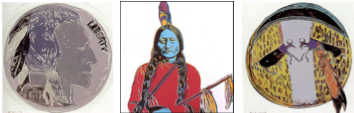
When Warhol trained his sharp eye on popular culture, his art rose to an iconic level and spoke volumes about America’s social climate. In this way, he was an ethnographer first, and King of Pop Art second. Warhol scrutinized everything that was going on in the 70s, from consumerism to the Marilyn Monroe obsession. Our favorite Warhol series at Valley Fine Art is “Cowboys and Indians.” In this series, he strategically placed images of General Custer, Annie Oakley, and Geronimo together to challenge and expose the controversy surrounding America’s perception of Cowboys and Indians

Andy Warhol led the pack. Although artists like Jasper Johns and Roy Lichtenstein were doing similar work, Warhol dug deeper. Because of his process and style, his work became very mechanical so much so that almost every detail of his art and process reflected the machine-like world that surrounded him in New York.

Warhol’s social and political commentaries were astute, sharp, and often witty, and the medium he chose was accessible to a large audience. Extremely intelligent and overflowing with ideas, Warhol created the ultimate expression of the spirit of the 70s in America.

Edward S Curtis Art – ‘A Promise Fulfilled’

Edward S Curtis Art - A Promise Fulfilled

Edward S Curtis art is focused on Native Americans from the United States. Edward S. Curtis’ iconic photograph of Chief Joseph of the Nez Perce introduced America to a brave chief who led his people during a time of great upheaval for Native Americans. Initially, there was a tenuous peace between the Nez Perce and the U.S. government; however, the relationship disintegrated when gold was discovered on Nez Perce lands and the government took back millions of acres promised to the tribe. Tensions grew to a boiling point in 1877. At that time, Chief Joseph had assumed a leadership role from his father, Joseph the Elder, and he agreed with the other chiefs that the government’s deal was unfair. During this time of turmoil, Nez Perce warriors killed several white settlers. The tribe was forced to retreat and Chief Joseph attempted to lead them to Canada under the pursuit of U.S. troops.

They were decimated by fighting, starvation, and harsh weather on their trek north to the border; the Chief could not bear to see them suffer. In October 1877, stopping forty miles short of Canada, in Montana, Chief Joseph surrendered and promised famously, “to fight no more forever.” The surviving members of his tribe were sent to reservations across the west, never to return to their ancestral home in Oregon.

A century after his death, Chief Joseph remains a well-known American figure. We stumbled across this story in an article in The Seattle Times, which you can access here.

Over 100 years ago, a Portland boy, Erskine Wood, asked Chief Joseph if there was anything his father, Charles Erskine Scott Wood, could do for him. The Chief replied that he was in need of a stallion to improve his pony herd. The father had, 15 years before, been among the troops that pursued the Nez Perce into Canada. The boy was sensitive to this history and, thinking that his father would rather return to the Chief his ancestral homeland, unfortunately never relayed this practical request. The decades passed and Erskine lay on his death bed at age 104. He felt so troubled by the unfulfilled promise that he told his granddaughter that it was his major regret in his life.

On July 27th 1997, members of the Wood family made good on the promise. They pooled together more than $22,000 to fund the purchase and delivery of a 3-year-old black-and-white Appaloosa stallion. By fulfilling this promise, the Woods family has given hope to a people that are still struggling, and truly showed their respect for the iconic Chief Joseph. Joseph’s great-great-grandson mentioned that it was not just a gift but a “promise kept, hope for the future of a people who still feel exiled.”

If you have any questions about Edward S Curtis art, or about any of our other featured artists, don’t hesitate to contact us today. We will get in touch with you as soon as possible, and feel free to drop by our gallery as well.

Influential Historic Artists and Why They Matter

It is not hard to see the beauty in one of Frederick Remington’s idyllic Cowboy portrayals, or the power in a Thomas moran landscape. Alone, even a reproduction of these works can take nearly anyone’s breath away. But why do they matter? Why are artists like Alfred Jacob Miller, Thomas Moran, Frederick Remington, and many more of VFA’s historical artists considered to be some of the most influential artists that America has ever seen?

To answer that question we have to think about what it took to be able to observe landscapes like the Grand Canyon, scenes of the fur trade in the primitive west, or even just glimpses of Native Americans. One had to be willing to endure long hours on dangerous terrain, many nights camping, and hot days under the sun. One had to be adventurous and brave, as not many had explored the American west at this time. Because these artists were willing to devout their lives no matter what the cost, we now are able to view some of the earliest images of the American West. These are depictions of scenes we may never be able to see again, or at least not in the same ways.

Thomas Moran

Thomas Moran, “Grand Canyon of the Colorado Rive, Arizona” – Available at Valley Fine Art.

Take Alfred Jacob Miller for example, an artist who dedicated his life to documenting the scenery of the fur trade, Native Americans, Cowboys and more, all along the hunting expedition of William Drummond Stewart. These images give us eyewitness account of North American exploration. Considered as much important historical documents as artistic works he gives us a glimpse into primitive west that we would otherwise have had to imagine from text. Or an artist like Thomas Moran, who was instrumental in securing our heritage of National parks. Moran’s depictions of Yellowstone are a huge reason behind why congress decided to establish the National park system in 1916. People didn’t know it was there, or that it was beautiful and Moran was able to influence an entire generations understanding about its country.

32124-B

Alfred Jacob Miller, “The Last Greenhorn”, Vintage chromolithograph, Available at Valley Fine Art

Another example is artist Frederick Remington who was also travelling and depicting early 19th century western images. Not only did he paint scenes that are now lost, but he often idealized such scenes, paving the way for an entire genre of Western fiction and film that we have grown to love so much today. Remington was also particularly talented and was one of the first to illustrate the true anatomically correct gait of the horse in motion. Each of these artists provided so much to the influence of how we see the west, as well as the direction of the art world in the 19th Century.

Remington

Frederick Remington “An Apache“, oil on canvas, Valley Fine Art: SOLD

Here at Valley fine art we have a vast collection of Historic Artists each influencing the way we see the American west in a different way. Without their tireless travels and creations we would be left with nothing but text. In Moran’s case we even could have been left without some of our National parks! I often get caught up in the captivating beauty of early 19th century artwork, but it is important to appreciate the peek into our history that these artists offer us even to this day.

Emily Richards, Valley Fine Art